Epoxy basement floors · Toronto & the GTA
Epoxy Basement Floor Toronto
Most epoxy basement floors that fail were never moisture-tested. We test first, then coat.
A properly installed epoxy or polyaspartic basement floor is seamless, moisture-resistant and lasts 10–20 years. The catch is your slab — Toronto basements move moisture, and skipping the test is why cheap floors peel. We test before we quote.
Is epoxy flooring good for a basement in Toronto?
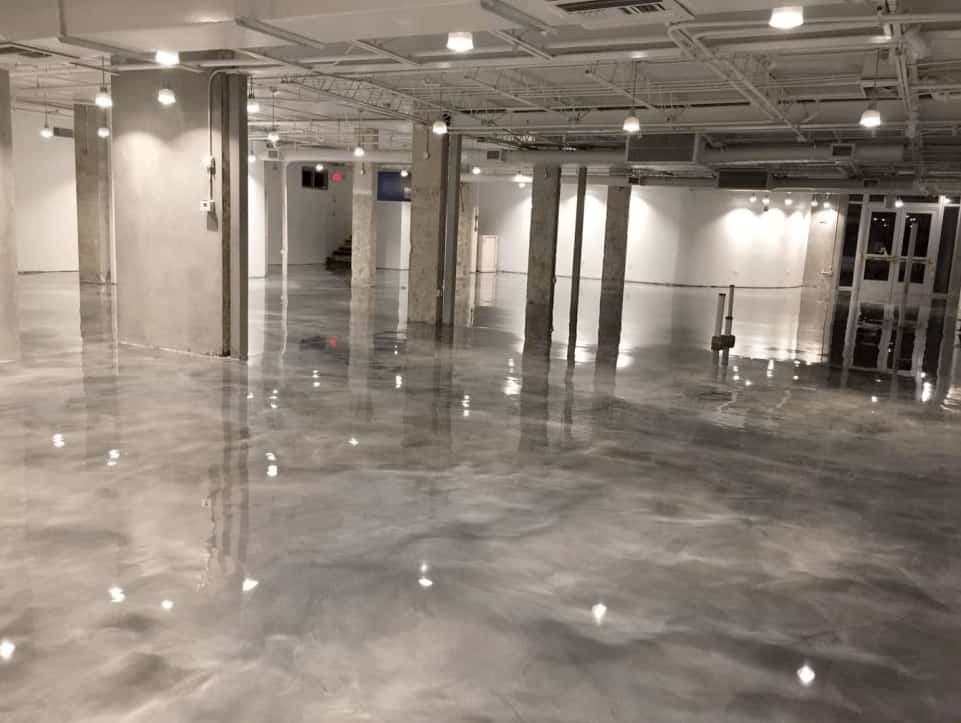
Yes — for the right basement. Epoxy is an excellent basement floor when the slab is dry and moisture-tested: it's seamless, easy to clean, resists moisture better than vinyl or carpet, and lasts 10–20 years. It's ideal for finished basements, rec rooms and home gyms with no direct sunlight. In damp basements, or ones with walkout doors and windows, a polyaspartic topcoat is the better call — it's UV-stable, more flexible, and won't yellow. The single most important step in Toronto is a moisture test before coating — skip it and even a good epoxy will bubble and peel within a year.
Lifespan
10–20 years
Professionally installed & sealed
Install time
1–2 days
Most residential basements
First step
Moisture test
Before any coating goes down
Best topcoat
Polyaspartic
For damp or lit basements
The real decision
Epoxy vs polyaspartic for a Toronto basement
Both beat bare concrete, but they're not interchangeable. The honest breakdown for below-grade Toronto basements:
| Factor | Epoxy | Polyaspartic |
|---|---|---|
| Best for | Dry, finished basements with no direct sun | Damp basements, walkouts, windows, workshops |
| Moisture tolerance | Good with a vapour-barrier primer | Better — more flexible, bridges hairline cracks |
| UV / yellowing | Can yellow near windows | UV-stable, won't yellow |
| Cure & re-use | Walk-on ~24–48h, fuller cure over days | Faster — often walk-on same or next day |
| Relative cost | Lower — budget-friendly | Higher — premium topcoat |
| Lifespan | 10–15 years done right | 15–20 years |
Our honest take: in a dry, windowless Toronto basement used as a rec room or gym, quality epoxy is a smart, cost-effective choice. In a damp basement, or one with a walkout or windows, a polyaspartic topcoat is worth the premium. We install both and a full flake system — so the recommendation follows your slab, not our stock.
The honest test
Will epoxy work on your basement floor?
Grinding and moisture-testing tell us before you spend. Here's how the call gets made:
Good candidate
Needs a different approach
If the slab isn't epoxy-ready, we'll say so — sometimes the answer is a polished concrete floor, a polyaspartic coating, or basement floor repair first. The moisture test settles it.
What it costs
What determines epoxy basement floor cost in Toronto
Basement epoxy in the Toronto market generally runs in the range of the mid-single digits to low-double digits per square foot, and where a specific floor lands depends on these:
Floor size — larger basements cost more in total but often less per square foot.
Surface prep — grinding, crack repair and old-coating removal are the biggest variable.
Moisture mitigation — a vapour-barrier primer where the slab needs it adds cost but prevents failure.
System chosen — basic epoxy is lowest; flake and polyaspartic topcoats cost more and last longer.
Why we don't quote a flat number: the same-size basement can vary widely once prep and moisture are known — a floor that skips the test looks cheaper today and fails within a year. We assess and moisture-test first, then give you a written, itemised quote with options side by side, held for 21 days. Free photo quotes, no charge if you don't proceed.
Reviews
What GTA homeowners say
★★★★★
Now the favourite room in the house
"My 70-year-old garage floor was a broken dusty wreck. They meticulously prepped and poured the new floor. It looked amazing, only to be made more amazing with the epoxy sealer."
★★★★★
Same people, start to finish
"Top to bottom professionalism. Starting with Hubert at the initial consultation, then scheduling with Deborah was a breeze. And when it came time for the actual work, Sergey and his assistant were top tier."
★★★★★
We require four quotes. They won.
"As a corporate management company we require four quotes at the very minimum before any project gets approved. Hubert and his team were the perfect candidate to deliver top quality work at a reasonable cost."
Questions
Epoxy basement floors — common questions
Yes, for a dry, moisture-tested slab. Epoxy is seamless, easy to clean, resists moisture better than vinyl or carpet, and lasts 10–20 years — ideal for finished basements, rec rooms and gyms. For damp basements or those with walkout doors and windows, a polyaspartic topcoat is the better choice because it's UV-stable and more flexible. The key first step is always a moisture test.
The number-one cause is moisture. Toronto basements move water vapour up through the slab, and if epoxy is applied without a moisture test and a vapour-barrier primer where needed, it bubbles and peels — often within the first year. We calcium-chloride test the slab first, prime for moisture where the readings call for it, and grind properly for adhesion. That's the difference between a floor that lasts 15 years and one that fails by next winter.
Basement epoxy in the Toronto market generally runs from the mid-single digits to low-double digits per square foot, with the final price driven by floor size, surface prep, whether moisture mitigation is needed, and the system chosen (basic epoxy is lowest; flake and polyaspartic cost more and last longer). Because prep and moisture change the number a lot, we moisture-test and assess first, then give a written itemised quote held 21 days. Text photos for a quote, usually within one business day.
A professionally installed and sealed epoxy basement floor lasts 10–20 years, depending on the system and traffic. A polyaspartic topcoat sits at the top of that range and resists UV and abrasion better. Proper surface prep and moisture control are what determine whether you get the full lifespan.
Epoxy is the cost-effective choice for a dry, windowless basement. Polyaspartic is better for damp basements, walkouts or rooms with windows because it's UV-stable, more flexible over hairline cracks, and cures faster. We install both plus flake systems and recommend based on your slab's moisture readings and how the space is used — see our full epoxy flooring and coatings options.
Sometimes — it depends on the moisture-vapour reading and whether the water source is fixed. A vapour-barrier primer handles moderate vapour transmission; active water intrusion has to be resolved first. If the slab can't take epoxy, options like a polished concrete floor or a different coating may suit better. The moisture test tells us which situation you're in.
Service area
Epoxy basement floors across Toronto & the GTA
Based in Mississauga, installing across the Greater Toronto Area — same crews, same standard, whatever the postal code.
Free assessment
Find out if your basement is epoxy-ready
Text three photos — the whole floor, any cracks or damp spots, and the area by the stairs. We'll tell you whether it's a candidate, whether epoxy or polyaspartic fits, and what to expect — in writing, usually within one business day.
Free photo quotes & site visits · Moisture-tested before we quote · Price held 21 days