Commercial and industrial floors · Toronto and the GTA
Commercial Epoxy Flooring Toronto
Warehouses, showrooms, retail, kitchens and plants. Coated around your hours, back in service fast.
Toronto Concrete Repairs installs commercial epoxy flooring, polyaspartic and urethane cement systems in commercial and industrial buildings across Toronto and the GTA, over concrete we've moisture tested, ground and repaired first. Nights, weekends and phased work so the business keeps running.
Quick answer
What is commercial epoxy flooring, and what does it cost in Toronto?
Commercial epoxy flooring is a resin coating system bonded to a prepared concrete slab to give a seamless, chemical resistant, easy to clean floor that stands up to forklifts, foot traffic and washdowns. Toronto Concrete Repairs installs three systems depending on the facility: epoxy for dry interiors and storage, polyaspartic where you need UV stability or a next day return to service, and urethane cement for commercial kitchens, food plants and anywhere with heat, grease or thermal shock. Installed cost typically runs $3 to $8 per square foot for epoxy and $6 to $12 for polyaspartic on floors under about 2,000 square feet; larger floors and urethane cement are priced after a site visit. Most jobs are done nights, weekends or in phases, and the floor is back in service in 24 to 48 hours.
The right system for the facility
Epoxy, polyaspartic, urethane cement or polished concrete?
We install all four, so the recommendation follows your floor, your traffic and your downtime window, not what we stock.
| System | Best for | Return to service | Watch out for | Cost |
|---|---|---|---|---|
| Epoxy | Dry storage, back of house, mechanical rooms, light to moderate traffic | 24 to 48 hours foot traffic, 3 to 5 days vehicles | Yellows in direct sun, slower cure, needs a dry slab | $3 to $8 per sq ft |
| Polyaspartic | Showrooms, dealerships, retail, warehouses, anywhere with windows or a tight shutdown window | Same or next day | Higher material cost, applies thin so prep must be right | $6 to $12 per sq ft |
| Urethane cement | Commercial kitchens, food and beverage plants, breweries, washdown areas, thermal shock | 24 to 72 hours depending on thickness | Heavier system, priced per project | Priced per project |
| Polished concrete | Sound slabs in retail and showrooms where you never want to recoat | Immediate after final pass | Shows the history of the slab, won't hide patches | Priced per project |
Our honest take: most warehouses and showrooms get a polyaspartic system because the return to service is a day, not a week. Dry storage and back of house areas are where plain epoxy saves money without a downside. Kitchens and food plants get urethane cement or nothing; epoxy fails under grease and hot water. If the slab is sound and you'd rather never recoat, compare polished concrete.
Where we install
Commercial epoxy flooring for every kind of facility
Warehouses and distribution
Polyaspartic or 100% solids epoxy
Forklift aisles, dock areas and racking zones. Floors repaired and joints filled first so the coating doesn't fail at the edges. See warehouse floor repair.
Auto dealerships and showrooms
Polyaspartic, flake or metallic
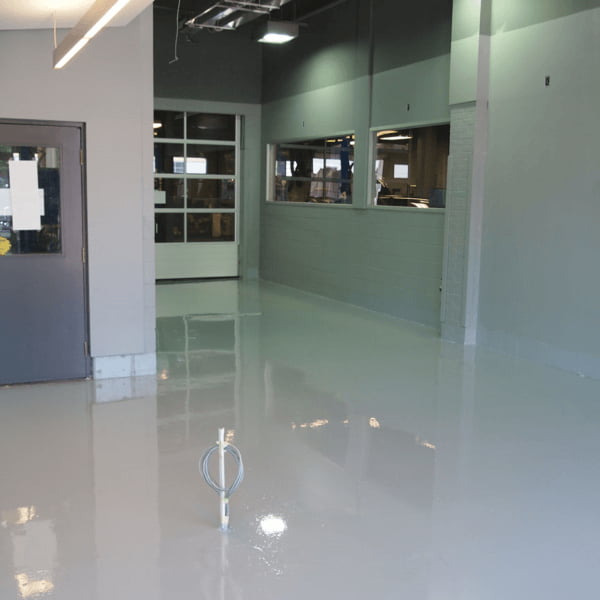
High gloss, UV stable floors that take hot tires and foot traffic and photograph well under showroom lighting. The hero on this page is a GTA dealership.
Retail and offices
Epoxy, flake or polished
Seamless, easy to maintain floors for stores, salons, clinics and office buildings, installed overnight so you open on time.
Commercial kitchens and food plants
Urethane cement
Grease, hot water, washdowns and thermal shock destroy epoxy. Urethane cement with coved edges and drains tied in is the system that survives a health inspection and a decade of service.
Manufacturing and plants
Epoxy or urethane, chemical resistant
Chemical resistant systems for production floors, matched to what's actually spilled on them, with line striping and safety zones if you need them.
Parking, mechanical and utility
Epoxy, sealers or densifiers
Parking levels, mechanical rooms, stairwells and loading areas. Often the right call is a sealer or densifier rather than a full coating; we'll say which.
Real floors
Commercial epoxy floors we've coated across the GTA


Commercial clients






The process
How we install a commercial epoxy floor
Coatings fail at the prep, not the product. Five steps, and the first three are the ones that decide whether the floor is still down in ten years.
Site assessment
Moisture test on the slab, traffic and chemical exposure mapped, downtime window agreed. Written proposal with the system, phasing and return to service dates.
Grind or shot blast
Mechanical profile across the whole floor. Old coatings, sealers, oil and laitance removed so the system bonds to concrete, not to contamination.
Repair and joints
Cracks, spalls and worn aisles repaired with rapid set mortar. Control joints cleaned and filled with semi rigid polyurea so wheels stop chipping the edges.
Prime and coat
Moisture tolerant primer where the readings call for it, then the base coat and the system you chose, with flake, colour or line striping built in.
Topcoat and handover
Wear coat applied, cure times in writing, floor handed back on the date in the proposal with maintenance guidance and the warranty.
Downtime
Coated around your hours, not ours
A commercial floor that costs you a week of operations isn't a good floor no matter how it looks. We plan the install around how your building actually runs.
Typical return to service
Reviews
What commercial clients say
★★★★★
We require four quotes. They won.
"As a corporate management company we require four quotes at the very minimum before any project gets approved. Hubert and his team were the perfect candidate to deliver top quality work at a reasonable cost. Work was done efficiently and on time based on the deadlines we outlined. Very happy with the service, will use again and will recommend to others."
★★★★★
Urgent work at our business
"Called Toronto Concrete Repair for some urgent work that needed to be done at our business. Super efficient, friendly and did a great job. We'll be using them again for future projects."
Questions
Commercial epoxy flooring: common questions
Epoxy systems typically run $3 to $8 per square foot installed and polyaspartic systems $6 to $12 on floors under about 2,000 square feet. Larger floors, urethane cement for kitchens and food plants, and jobs with heavy repair or old coating removal are priced after a site visit, because prep is the biggest variable. Every commercial project gets a written, itemised proposal with the system, phasing and return to service dates, held for 21 days.
10 to 15 years for epoxy and 15 to 20 for polyaspartic under normal commercial traffic, provided the slab was prepped properly and the floor is kept clean of grit. Forklift aisles and dock areas wear fastest and are usually recoated with a fresh wear coat every 5 to 7 years rather than redone from scratch. Floors that fail in year one almost always skipped the grind or the moisture test.
Yes. We work nights, weekends and holiday closures, or in phased sections so part of the floor stays open. Polyaspartic systems are the usual choice when the floor has to be back the next morning. The phasing plan is part of the written proposal, not worked out on the day.
Dry storage and back of house: epoxy, the lowest cost. Showrooms, retail, warehouses and anywhere with windows or a tight shutdown: polyaspartic, for UV stability and a one day return. Commercial kitchens, food plants, breweries and washdown areas: urethane cement, because grease, hot water and thermal shock break epoxy. We assess the floor and the exposure, and recommend in writing.
Yes, and the preparation matters more than the coating. Control joints are filled with semi rigid polyurea so wheels stop chipping the edges, worn aisles and dock approaches are repaired with rapid set mortar, and the system is specified for the tire type and load. See warehouse floor repair and control joint repair.
Not over it. The old coating has to come off, by grinding or shot blasting, down to sound concrete, and the slab moisture tested before anything new goes down. Coating over a failing floor just means paying twice. Removal is itemised in the proposal so you see what it costs.
Yes. Full commercial liability insurance and WSIB coverage, with certificates of insurance and WSIB clearance provided on request before the job starts. That's the paperwork property managers, condo boards and facility managers need to approve the work.
Yes. Aisle lines, hazard zones, pedestrian walkways and colour coded areas are built into the coating system. Coved edges and drain tie ins are standard on urethane cement floors in kitchens and food facilities.
Service area
Commercial epoxy flooring across Toronto and the GTA
Based in Mississauga, coating commercial and industrial floors across the Greater Toronto Area.
Commercial concrete Warehouse floor repair Control joint repair Polished concrete Epoxy flooring Property managers
About Toronto Concrete Repairs. Toronto Concrete Repairs (legal name Toronto Concrete Repair Inc.) is a Mississauga based concrete repair, resurfacing and replacement contractor serving Toronto and the GTA since 2015. Our only website is torontoconcreterepairs.ca and our phone number is 416 471 3068. We are not affiliated with TCR Pro, tcrpro.ca, or any other company using a similar name.
Free site assessment
Get a written proposal for your floor
Tell us the facility, the square footage and the shutdown window you can live with. We'll walk the floor, moisture test the slab, and send back a written proposal with the system, phasing and return to service dates, usually within two business days of the visit.
Licensed, insured and WSIB · Certificates on request · Written proposals held 21 days