Industrial floor joints · Toronto & the GTA
Control & Expansion Joint Repair for Warehouse and Food Facility Floors
Failed joints stop forklifts, fail inspections and spread damage across the slab. We rebuild spalled joint edges and fill them with semi-rigid polyurea rated for heavy traffic — on your schedule, with the floor back in service fast.
What this is
What is control joint repair, and why does it matter?
Control joints are the saw-cut lines in a concrete floor that let the slab shrink and move without cracking randomly. Expansion joints do the same job at walls, columns and between pours. Both are filled to protect their edges — and when that filler fails, the exposed joint shoulders take every forklift wheel impact and start to spall.
Control joint repair means cutting out the failed filler and any broken concrete along the joint, rebuilding the spalled edges, and refilling with a semi-rigid polyurea that supports the joint shoulders under hard-wheeled traffic. Done properly, it stops the spalling from spreading, removes trip and wheel hazards, and gives washdown areas a flush, sealed joint with nowhere for water or bacteria to sit.
The failure pattern
Why floor joints fail
Most joint failures we see in GTA warehouses and plants come down to the same few causes:
- Wrong filler. Soft caulk or silicone doesn't support the joint edge. Every forklift wheel that crosses it loads the unsupported shoulder until it breaks.
- Filler installed too shallow. A thin bead sitting on backer rod has nothing to grip and pops out within months.
- Wheel impact on hard tires. Polyurethane forklift tires concentrate the load. Once an edge chips, each pass widens it.
- Debris and washdown. Grit packs into open joints and acts as a wedge; in food plants, water and cleaning chemicals get under the slab surface.
- Slab movement. Joints that were never filled, or filled before the slab finished shrinking, open up and tear the filler.
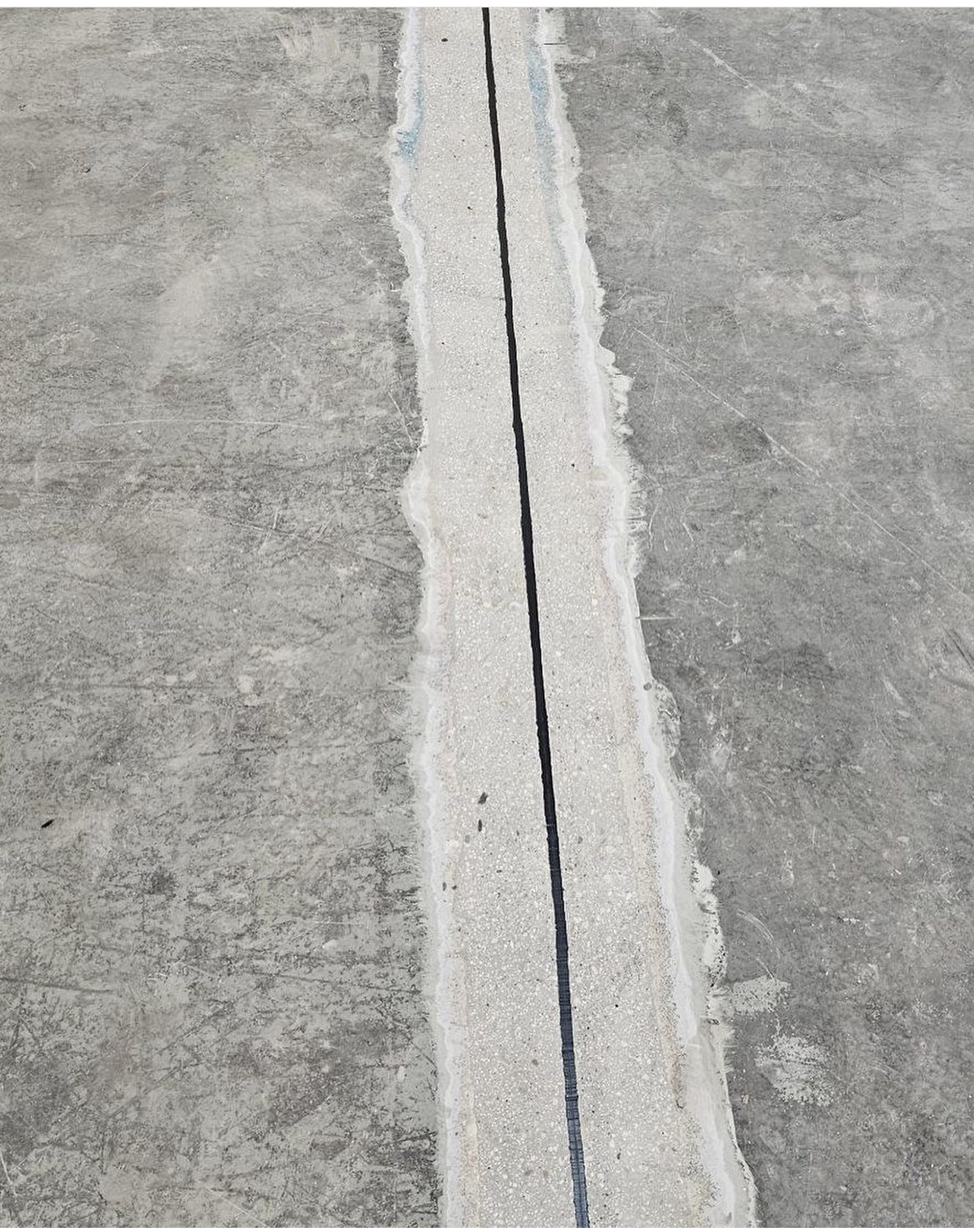
Control joint repair by our crew — spalled edges rebuilt and refilled with semi-rigid polyurea.
How we do it
Our control joint repair process
The difference between a joint that lasts and one that fails again in a year is almost all in the prep and the fill depth. Here is exactly what our crews do.
Assess & map
We walk the floor with your facility contact, mark every failed joint and spalled edge, note traffic patterns and washdown zones, and sort joints into refill versus edge rebuild.
Cut out the old filler
Failed filler, sealant and packed debris are routed or saw-cut out to full depth so the new material bonds to clean concrete, not to old caulk.
Rebuild spalled edges
Broken joint shoulders are squared up and rebuilt with a rigid, high-strength repair mortar, then re-cut so the joint has two solid, straight edges to support.
Clean & set depth
The joint is vacuumed and dried. We set the correct fill depth — full-depth or deep-fill, not a shallow bead — so the filler has enough body to carry wheel loads.
Semi-rigid polyurea fill
The joint is overfilled with a two-part semi-rigid polyurea rated for forklift traffic and, in food areas, a food-facility-rated product that cures fast and resists washdown chemicals.
Shave flush & return to service
Once cured the fill is shaved flush with the slab for a smooth, sealed transition. Most joints take foot traffic within hours and forklifts the same or next day.
Real work
Warehouse floor joint repair — before & after
A GTA warehouse floor with spalled, failed joints — cut out, edges rebuilt and refilled by our crew.
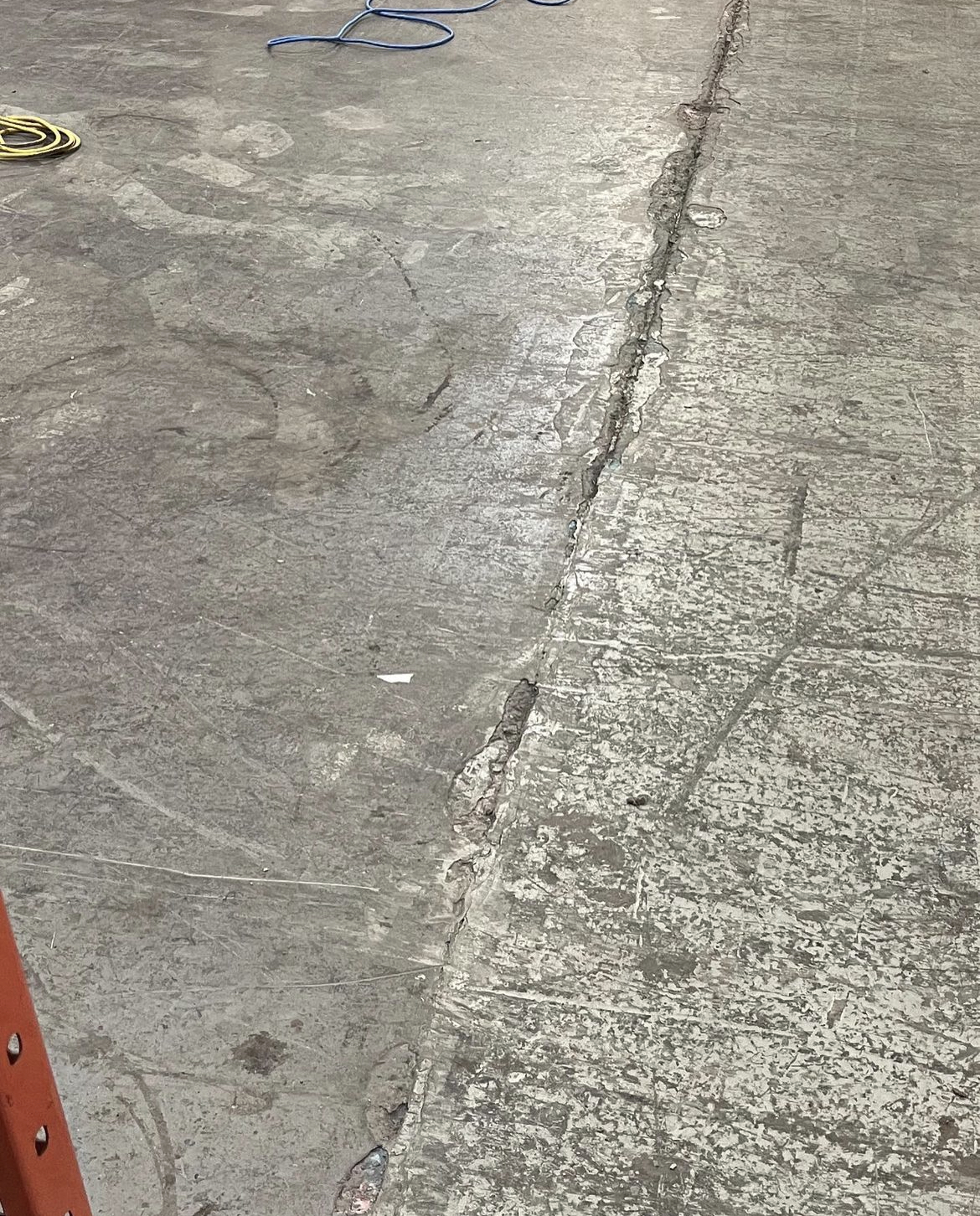
Control joint repair on a Toronto warehouse floor — joint edges rebuilt, semi-rigid fill shaved flush.
The material matters
Semi-rigid polyurea vs. caulk — why the cheap fix fails
Plenty of floors get "repaired" with a tube of sealant. It looks fine for a season. Then the edges start going again, because the material was never designed to carry a wheel.
Caulk / sealant What we're replacing
- Soft and flexible — gives under load, so the edge takes the hit
- Shallow bead over backer rod, easily wedged out by debris
- Breaks down under forklift tires and washdown chemicals
- Sinks and traps grit, water and bacteria in the joint
Semi-rigid polyurea What we install
- Firm enough to support the joint shoulders under hard wheels
- Installed deep so it has body and bond, not just a surface skin
- Rated for heavy industrial traffic and chemical exposure
- Shaved flush — sealed, smooth, easy to clean and inspect
Where this work matters most
Joint repair by facility type
Food & beverage facilities
Open or sunken joints in processing, packaging and washdown areas hold water and residue and draw questions at inspection.
- Food-facility-rated semi-rigid filler
- Flush, sealed joints with no harborage
- Resists washdown, sanitizers and thermal cycling
- Work coordinated with your QA and sanitation windows
Warehouse & distribution
Forklift wheels find every failed joint in a travel aisle. Spalled edges rattle equipment, damage tires and become trip hazards.
- Edge rebuild in high-traffic aisles and at dock doors
- Heavy-traffic polyurea fill, shaved flush
- Phased by aisle so racking stays accessible
- Nights, weekends and holiday shutdowns
Manufacturing & cold storage
Heavy point loads, chemical exposure and temperature swings tear conventional fillers. Cold rooms need materials that cure and perform at low temperatures.
- Fillers matched to chemical and thermal exposure
- Low-temperature-rated products for cold storage
- Scheduled around maintenance and defrost windows
- Repairs designed to hold up under plant traffic
Downtime
Built around your operating hours
Joint repair is fast, sectional work — which makes it one of the easiest industrial repairs to do without stopping production.
Commercial clients
What facility and property managers say
We require four quotes. They won.
As a corporate management company we require four quotes at the very minimum before any project gets approved. Hubert and his team were the perfect candidate to deliver top quality work at a reasonable cost.
A home builder's contractor of choice
I am a home builder in Mississauga with high standards when it comes to concrete work. I started using Toronto Concrete Repairs in 2018 and have been continuously impressed with the accuracy and care. Hubert builds a level of trust and transparency with his clients. Their work is exceptional.
Urgent work at our business
Called Toronto Concrete Repair for some urgent work that needed to be done at our business. These guys were super efficient, friendly and did a great job. Very happy with the service. We'll be using them again for future projects.
Related commercial services
More industrial floor work
Warehouse floor & dock repair
Forklift damage, spalling, cracks, slab leveling and loading dock rebuilds — the full industrial floor service.
Commercial epoxy & polyaspartic
Coat the floor after the joints and surface are repaired — abrasion and chemical resistance for plants and warehouses.
Property managers
Multi-site scheduling, consistent crews and maintenance programs for portfolios across the GTA.
Questions
Control joint repair FAQ
What is the difference between a control joint and an expansion joint?
Why did my joint filler pop out or sink?
Can you repair joints in a food processing facility?
How quickly can forklifts drive over repaired joints?
Do you have to shut the warehouse down?
How much does control joint repair cost?
Should we repair joints before or after a floor coating?
How long does a semi-rigid joint repair last?
Book a free site assessment
We'll walk the floor with you, map every failed joint, and send a written proposal with scope, materials, phasing and return-to-service times — usually within 48 hours of the visit.